
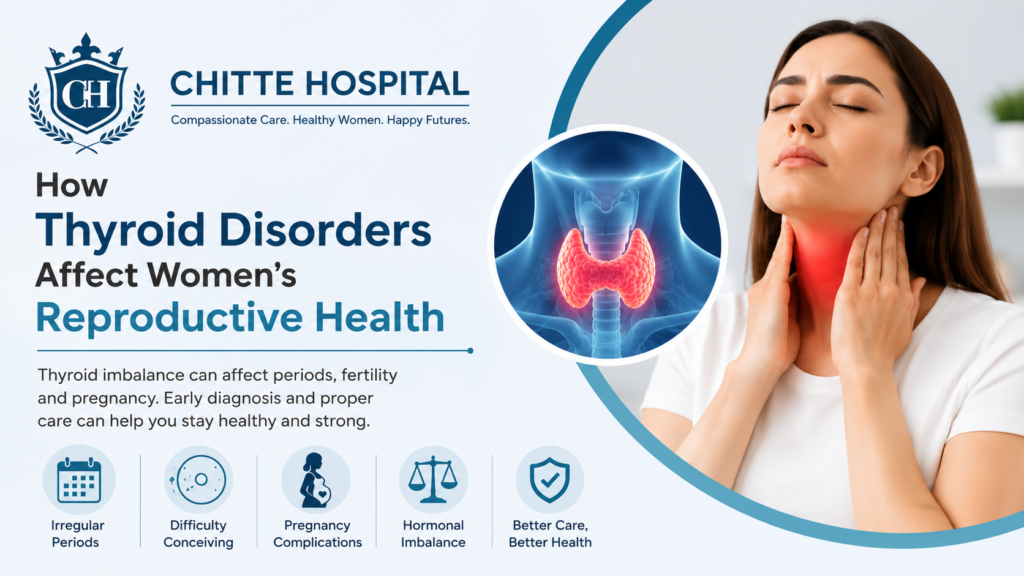
The thyroid gland plays a crucial role in regulating many important body functions, including metabolism, energy levels, hormonal balance, and reproductive health. In women, thyroid disorders can significantly affect menstrual cycles, fertility, pregnancy, and overall reproductive well-being.
According to Dr. Anil Chitte and Dr. Varsha Chitte, early diagnosis and proper treatment of thyroid disorders are essential for maintaining healthy reproductive function and preventing pregnancy-related complications.
What is the Thyroid Gland?
The thyroid is a small butterfly-shaped gland located in the neck. It produces hormones that help regulate:
- Metabolism
- Body temperature
- Heart rate
- Energy levels
- Hormonal balance
When the thyroid produces too much or too little hormone, it can lead to thyroid disorders.
Common Types of Thyroid Disorders
1. Hypothyroidism
This occurs when the thyroid gland produces insufficient hormones.
2. Hyperthyroidism
This condition occurs when the thyroid becomes overactive and produces excess hormones.
Both conditions can affect reproductive health in women.
How Thyroid Disorders Affect Women’s Reproductive Health
Irregular Menstrual Cycles
Thyroid imbalance can disrupt normal menstrual patterns, leading to:
- Irregular periods
- Heavy bleeding
- Missed periods
- Painful menstruation
Difficulty Conceiving
Hormonal imbalance caused by thyroid disorders may interfere with ovulation, making it difficult for women to become pregnant.
Increased Risk of Infertility
Untreated thyroid problems can contribute to fertility challenges and reduce reproductive health.
Pregnancy Complications
Thyroid disorders during pregnancy may increase the risk of:
- Miscarriage
- Preterm delivery
- High blood pressure
- Low birth weight
- Pregnancy complications
This makes proper thyroid management especially important during pregnancy.
Impact on Baby’s Development
Severe untreated thyroid imbalance during pregnancy may affect the baby’s growth and brain development.
Symptoms of Thyroid Disorders in Women
Women with thyroid imbalance may experience:
- Fatigue
- Weight changes
- Hair loss
- Mood swings
- Irregular periods
- Difficulty conceiving
- Swelling in the neck
- Increased sensitivity to cold or heat
Women experiencing these symptoms should seek medical evaluation.
Diagnosis and Treatment
Thyroid disorders are usually diagnosed through:
- Blood tests
- Thyroid hormone level assessment
- Clinical examination
Treatment depends on the type and severity of the condition and may include:
- Thyroid medications
- Hormone regulation
- Lifestyle and dietary management
- Regular monitoring during pregnancy
With timely treatment, many women can achieve healthy pregnancies and improved reproductive health.
Importance of High-Risk Pregnancy Care
Women with thyroid disorders may require specialized pregnancy monitoring and expert obstetric care to ensure the safety of both mother and baby.
Comprehensive prenatal care helps manage:
- Hormonal balance
- Fetal development
- Maternal health
- Pregnancy complications
Expert Women’s Healthcare in PCMC
For advanced gynecological and infertility care, Dr. Anil Chitte and Dr. Varsha Chitte are known for providing compassionate and expert women’s healthcare.
With over 15 years of experience as Gynecologists, Laparoscopy, and Infertility Specialists, they offer comprehensive services including:
- Routine gynecological check-ups
- Infertility treatment
- Pregnancy care
- High-risk obstetric management
- Advanced laparoscopic procedures
Their expertise in High-Risk Pregnancy Care in PCMC has helped many women experience safer pregnancies and improved reproductive health outcomes.
They hold qualifications in:
- M.B.B.S.
- M.D.
- D.G.O.
- Obstetrics & Gynecology
Their patient-focused approach and clinical excellence continue to support women in achieving healthier lives and successful parenthood journeys.
Conclusion
Thyroid disorders can significantly affect women’s reproductive health, fertility, and pregnancy outcomes if left untreated. Early diagnosis, proper hormonal management, and regular gynecological care are essential for maintaining overall well-being.
Women experiencing irregular periods, fertility issues, or thyroid-related symptoms should consult an experienced gynecologist for proper evaluation and personalized treatment.