
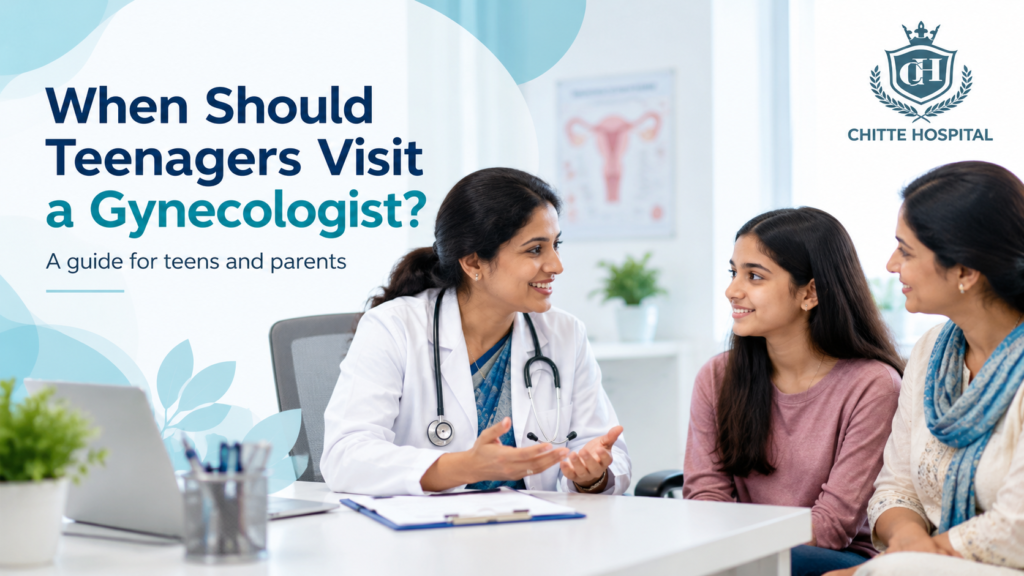
When Should a Teenager See a Gynecologist?
Periods, puberty and hormonal changes can raise many questions for teenage girls. Some changes are part of normal development, but problems such as severe period pain, unusually heavy bleeding or delayed puberty may need medical attention.
Parents often wonder whether their daughter needs to see a gynecologist before adulthood. The answer depends on her age, development and health concerns. A teenager does not need to wait until she has a serious problem to ask a doctor about menstrual or reproductive health.
If you are looking for a gynecologist for teenagers in Bhosari, knowing when to arrange a consultation and what to expect during the first visit can help you prepare.
At What Age Should a Teenager Visit a Gynecologist?
There is no single age at which every teenager in India must have her first gynecological appointment.
The American College of Obstetricians and Gynecologists (ACOG) recommends an initial reproductive health visit between the ages of 13 and 15. This is professional guidance from the United States, not a compulsory age requirement for every teenager in India.
In India, the government’s Rashtriya Kishor Swasthya Karyakram (RKSK) covers adolescents aged 10–19 and promotes health education and access to adolescent-friendly health services.
A consultation may be helpful when a teenager has questions about puberty, periods or personal health. Medical advice should be sought earlier if concerning symptoms develop.
When should parents arrange a consultation?
Consider making an appointment if your daughter:
- Has not started her periods by age 15.
- Has not developed breast growth by age 13.
- Experiences severe period pain or unusually heavy bleeding.
- Has repeated missed periods or significant changes in her menstrual cycle.
- Develops persistent vaginal itching, irritation or unusual discharge.
- Has concerns about puberty or other changes in her body.
These signs do not necessarily indicate a serious condition. A doctor can assess the symptoms and decide whether further investigation is needed.
Six Signs That a Teenager May Need a Gynecologist
1. Her Periods Have Not Started
The timing of the first period varies from person to person. However, medical evaluation is generally recommended if menstruation has not started by age 15 or breast development has not begun by age 13.
The doctor may review growth, development, family history and other symptoms. Depending on the findings, blood tests or imaging may be recommended.
2. Her Periods Are Very Heavy
Heavy menstrual bleeding can interfere with school, sleep and everyday activities. It may also cause iron deficiency or anaemia.
Look out for:
- Bleeding that lasts longer than seven days.
- Repeatedly soaking through sanitary pads in a short time.
- Passing large blood clots.
- Unusual tiredness, weakness or dizziness during periods.
A gynecologist can assess the bleeding pattern and identify possible causes. If heavy bleeding is accompanied by fainting, severe dizziness or difficulty breathing, seek urgent medical care.
3. She Has Severe Period Pain
Mild cramps are common during menstruation. However, pain that regularly prevents a teenager from attending school or doing normal activities should not be ignored.
Arrange a consultation if the pain is severe, becomes progressively worse or occurs alongside persistent pelvic pain, fever or repeated vomiting.
The doctor can assess whether the symptoms are related to menstrual cramps or another condition that needs treatment.
4. Her Periods Are Frequently Irregular
Periods may be irregular during the first few years after menstruation begins. However, repeated missed periods or long gaps between periods deserve attention.
Other symptoms, such as major weight changes, persistent acne or unusual hair growth, may help the doctor understand what is happening.
Possible causes include hormonal conditions, thyroid problems, stress and changes in weight. The cause cannot be confirmed from menstrual irregularity alone.
5. She Has Signs of a Possible Hormonal Problem
Some teenagers experience irregular periods, persistent acne or increased facial and body hair. These symptoms can have several causes, including polycystic ovary syndrome (PCOS).
Having one or more of these symptoms does not automatically mean a teenager has PCOS. Diagnosis in adolescents requires careful clinical assessment because some features of puberty overlap with PCOS symptoms.
If these changes are persistent or concerning, a gynecologist can assess the symptoms and explain whether further evaluation is appropriate.
6. She Has Vaginal Itching or Unusual Discharge
Clear or white vaginal discharge without a strong smell, itching or irritation can be normal during puberty.
However, persistent itching, burning during urination, unusual-smelling discharge, sores or pelvic pain should be assessed by a healthcare professional.
Avoid using vaginal washes, antibiotics or other medicines without appropriate medical advice. Treatment depends on the underlying cause.
What Happens During the First Gynecologist Appointment?
A first visit does not automatically involve an internal examination. In many cases, the appointment focuses on questions, health education and understanding the teenager’s concerns.
Medical history and discussion
The doctor may ask about periods, general health, medicines, previous illnesses and symptoms. Keeping a record of period dates, duration and pain can help make the discussion more useful.
General health check
Depending on the reason for the appointment, the doctor may check height, weight, blood pressure or other aspects of general health.
Tests, if needed
Blood tests or an ultrasound may be recommended if the symptoms and examination suggest that further investigation is needed. Not every teenager requires these tests.
Is an internal examination necessary?
An internal pelvic examination is generally not needed for a routine first visit when there are no symptoms requiring it. If an examination is medically indicated, the doctor should explain the reason, procedure and available alternatives.
The teenager’s comfort, informed participation and applicable consent requirements should be respected.
How Can Parents Prepare Their Daughter?
Parents can help make the appointment easier by talking openly about periods and puberty without making the teenager feel embarrassed.
Before the visit:
- Note the dates and duration of recent periods.
- Write down symptoms such as pain, heavy bleeding or missed periods.
- Bring relevant medical reports and prescriptions.
- Encourage your daughter to ask questions in her own words.
- Ask the doctor to explain any proposed examination or test before it takes place.
Teenagers may also want some time to discuss personal health concerns privately with the doctor. Families should ask the treating hospital about confidentiality and its limits, particularly where a minor’s safety or legal reporting obligations are involved.
Under India’s Protection of Children from Sexual Offences (POCSO) framework, a person under 18 is a child. Legal safeguards and reporting requirements may apply in relevant circumstances. Healthcare professionals must follow applicable law; absolute confidentiality should not be promised.
When Should You Seek Urgent Medical Care?
Do not wait for a routine appointment if a teenager experiences:
- Very heavy bleeding with fainting or severe dizziness.
- Sudden or severe abdominal or pelvic pain.
- Severe pain accompanied by fever or repeated vomiting.
- Heavy bleeding or severe pain when pregnancy is possible.
Seek urgent medical assessment, and go to an emergency department if symptoms are severe.
Frequently Asked Questions
At what age should a teenager first see a gynecologist?
There is no single compulsory age for every teenager in India. ACOG recommends an initial reproductive health visit between ages 13 and 15, while Indian adolescent health services cover ages 10–19. Symptoms or concerns may warrant an earlier consultation.
Does a teenager need an internal examination at her first visit?
Usually not if the appointment is for routine health education and there are no symptoms requiring an examination. The doctor will decide what is appropriate based on the teenager’s needs.
Are irregular periods normal in teenage girls?
Periods can be irregular during the first few years after menstruation begins. Repeated missed periods, very heavy bleeding or severe pain should be discussed with a healthcare professional.
Should parents accompany their daughter?
A parent or guardian can help with the appointment and medical history. The teenager should also have an opportunity to ask questions and understand her care. Privacy and consent arrangements must follow applicable Indian law and clinical requirements.
How can I find a gynecologist for teenagers in Bhosari?
Look for a qualified gynecologist who can assess puberty-related concerns, explain menstrual health and recommend tests only when clinically appropriate. You can review the gynecological services offered by Chitte Hospital before arranging an appointment.
Consult Chitte Hospital
If your daughter has concerns about her first period, irregular menstruation, painful cramps or other puberty-related changes, consulting a qualified gynecologist can help determine whether further evaluation is needed.
Visit Chitte Hospital to learn more about the hospital and its healthcare services. You can also explore the gynecology service page for information about women’s healthcare.
For appointment enquiries, visit the Contact Us page.
Medical disclaimer: This article provides general health information and does not replace a medical consultation. Symptoms and treatment decisions should be assessed by a qualified healthcare professional.
Medical review: The hospital should have a qualified gynecologist review the final content before publication.